Start here
Is the Florence evening classical concert worth it? Reading 724 reviews at 4.6
A chamber orchestra, a programme on paper and a choice of seat classes weighed up, with a plain view of who will enjoy the night.
Reserve my seats ↗Quick answer
Largely yes, as long as you want a small-scale night of famous music and not a symphonic spectacle. The listing carries a 4.6 average over 724 reviews, and the Orchestra da Camera Fiorentina is named as the performer of works by Vivaldi, Mozart, Bach and Pachelbel. Two settings are mentioned, a historic church turned concert hall near the Ponte Vecchio and the Zeffirelli Museum, and the option you pick decides which. Because cancellation is free, payment can wait and a printed programme is included, trying it costs little. Strings played at close range in an old Florentine room are the draw; those who crave brass, choir and a large orchestra should look elsewhere.
The concert at a glance
| Florence evening classical music concert | |
|---|---|
| The evening | A Florentine chamber orchestra playing Vivaldi, Mozart, Bach and Pachelbel |
| The rooms | The Santo Stefano al Ponte Vecchio auditorium or the Zeffirelli Museum, by option |
| Seats | Several seating categories; the calendar shows which are open |
| In your hands | A printed programme, says the booking page |
| Guest score | 4.6 from 724 reviews on GetYourGuide |
| Accessibility | Wheelchair-accessible flag on the page; check the option you pick |
| Cancelling | Free to cancel, with payment deferred |
The verdict, then the reasons
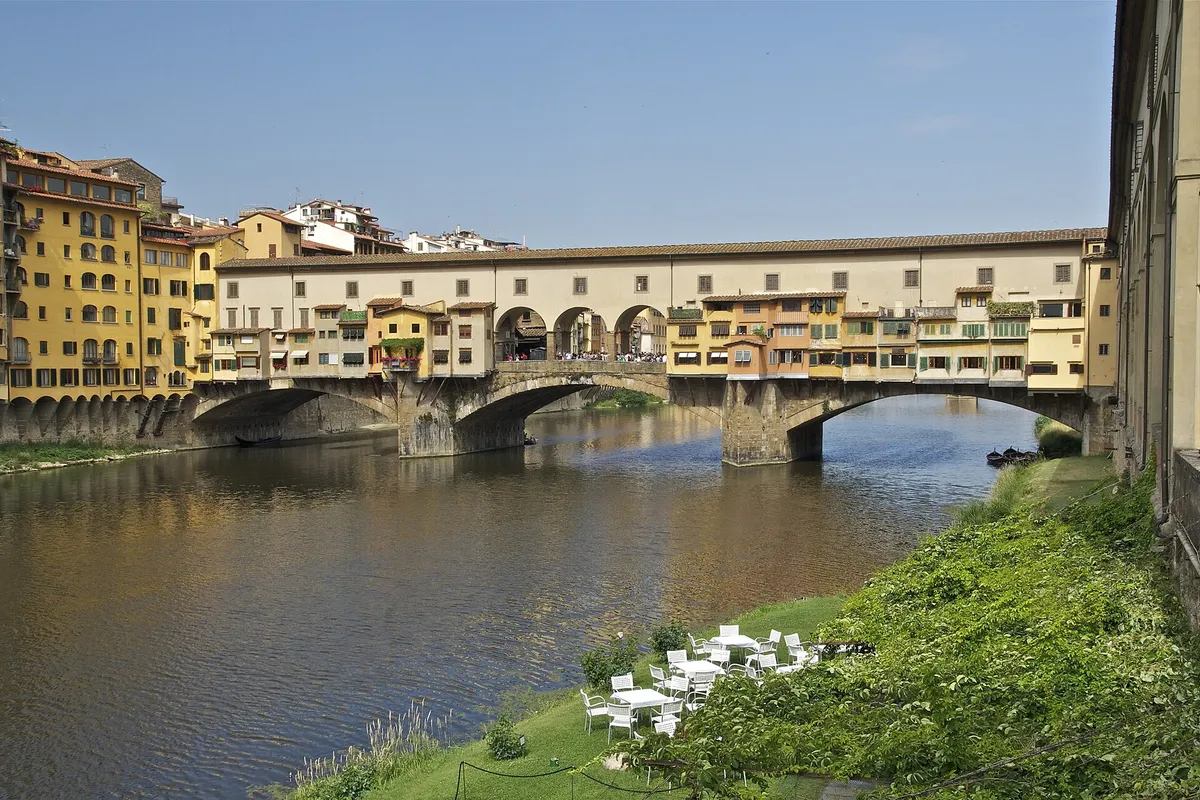
Book it if you want a calm, close-up evening of music you already know. That settles most of it. The star score counts for less than your taste in formats, because a chamber concert is a specific kind of night. You sit down, a small string ensemble plays, and the programme moves through works that most people recognise within a few bars. A traveller who has never been to a classical concert will find it an easy first one. A listener who wants the scale of a full orchestra, or a modern concert hall with tiered seating and a famous conductor, should read the next sections and set expectations accordingly. Judged as an evening in a historic Florentine room, with Vivaldi's Four Seasons as the centrepiece, it earns its place on a short list.
What the booking page actually says
The listing names the Orchestra da Camera Fiorentina, which plays Vivaldi, Mozart, Bach and Pachelbel. It places the concert, depending on the option, either in the Santo Stefano al Ponte Vecchio auditorium, a historic church turned concert hall in its words, or in the Zeffirelli Museum. It says there are several seating categories and that a printed programme is included. It flags the experience as wheelchair accessible, free to cancel and payable later. It does not publish a fixed running order, and the running time and start time sit in the calendar on each option, which is why this guide quotes neither. Anything beyond those lines, such as the exact seat layout, is not on the page, and a careful buyer should not assume it.
What an average of 4.6 does and does not prove
A score of 4.6 across 724 reviews is a solid sample, far larger than the few dozen reviews behind many small evening shows. It tells you that most guests were pleased, and the number is high enough to rule out a serious problem with the basics: the music, the venue and the arrival. It does not tell you which room those guests sat in, because the same listing covers more than one setting, nor which seating category they paid for. A guest in the front rows of a small hall will describe a different evening from one at the back of a different venue, and the star average blends them. Read the score as a vote of confidence in the format, and read the option name as the thing that decides your own room.
The music itself
The programme is built from some of the most recognisable pieces in the repertoire. Wikipedia dates the publication of Vivaldi's Four Seasons to 1725 in Amsterdam, where they headed his Op. 8 set of twelve concertos; each one pictures a season and comes with a sonnet. The Canon of Pachelbel started as a work for three violins above a continuo bass, and nobody knows when it was composed, with guesses between 1680 and 1706. Mozart and Bach complete the list on the page. Because the pieces are familiar, the evening works even for guests who cannot tell a concerto from a sonata: you spend less effort identifying the music and more simply listening to how it is played.
A chamber sound, close to the players
On Wikipedia, chamber music means works for a handful of players, historically for a room in a palace, usually with a single musician on each part, while orchestral string parts are shared among many players. That contrast shapes the night. In a room like the ones the page names, you hear separate violin lines, the cello underneath and the pulse of a keyboard or plucked bass, rather than a blended sheet of sound. The pleasure is detail: how a soloist shapes a phrase, how the lines pass between players. The drawback is scale. A small ensemble cannot deliver the thunder of a symphony orchestra, and guests expecting that may find the sound modest.
The two settings, and why you should check yours
Santo Stefano al Ponte is an old church. Italian Wikipedia says it is documented in 1116 and probably founded earlier, that its lower facade keeps Romanesque traces and that its interior was remodelled in the 17th century. In recent decades it has been used as an auditorium and for exhibitions and concerts. The Zeffirelli Museum, according to Visit Tuscany, stands at Piazza di San Firenze a few steps from Palazzo Vecchio, and honours the Florence-born director Franco Zeffirelli, whose stage and film work the museum presents. The two rooms are different in atmosphere, one a church hall with centuries of stone around you and the other a museum space tied to a twentieth-century stage designer. Neither is better in the abstract. The point is to know which one your ticket names before you plan the walk there.
Choosing a seat
The listing offers a range of seating categories, and the calendar marks those still open on your date. No seating plan is described, and this guide will not make one up. Begin with the kind of evening you are after. If you want to watch the players' hands and bows, the closer category is the likelier fit. If you simply want the music in a beautiful room and are happy at some distance, a lower category saves money and still delivers the same programme. In a small ensemble setting the sound reaches every row, so the main thing you pay extra for is proximity and sightline. Compare the categories for your date side by side, and remember that availability is live: the best seats go first, so waiting until the week itself narrows your options.
Where it falls short
This is no full orchestral concert, no opera and no lecture. There is no staging, no singers named on the page and no promise of a particular soloist. It is not a daytime sightseeing activity either: it fills an evening, so it competes with dinner, not with the Uffizi queue. It is also not a flexible drop-in: you book a date and an option, and the confirmation fixes your room and time. Finally, the page does not state a dress code or an age limit. Treat that as a gap to check on your option, not as a green light, particularly if you are travelling with children.
Who should book it, and who should skip it
Book it if you like the Four Seasons, if you want one evening in Florence that is not a restaurant, if you travel with a partner or parent who enjoys classical music, or if you want a dry, indoor plan for a wet night. Skip it if you want a loud, big-stage show, if you cannot sit still for the length the calendar shows, or if you would rather spend an evening wandering the centre after dark. For those who are undecided, free cancellation and pay-later booking mean the cost of trying is low. The sensible move is to look at your dates, see which option has the seating category you want and decide there.
Frequently asked questions
Is the price fair?
For live music in a historic room, broadly yes: the 724 reviews average 4.6, and several seat classes let you set your own level. Compare the classes on your date.
Which room will I be in?
It depends on the option you choose: the page names the Santo Stefano al Ponte Vecchio auditorium and the Zeffirelli Museum. Check the option name and your confirmation.
Is any classical-music knowledge needed?
No. The works the listing names are some of the most familiar in classical music, and a printed programme comes with your ticket.
Can I change my mind?
Cancellation is free on the page, and the calendar gives the deadline for your option. Payment can also wait until later.
Sources