The music
Vivaldi's Four Seasons: four sonnets you can hear
Birdsong in spring, a storm in summer, a hunt in autumn and ice in winter: what each concerto pictures and what to listen for in the room.
Reserve my seats ↗Quick answer
The Four Seasons are a cycle of four violin concertos that Vivaldi's Op. 8 opened with when it appeared in Amsterdam in 1725; each has three movements and its own sonnet. Wikipedia lists the imagery: birdsong, streams and a thunderstorm in Spring; heat, a cold wind and a hailstorm in Summer; a harvest dance and a dawn hunt in Autumn; and shivering on ice and warmth by the fire in Winter. Live, you can follow the story as the solo violin and the strings act it out.
The four concertos in brief
| Season | What the sonnets and music depict |
|---|---|
| Spring | Birdsong, murmuring streams, thunder, a sleeping goatherd and dancing shepherds |
| Summer | Languid heat, the cuckoo and turtledove, a cold north wind and a ruinous hailstorm |
| Autumn | A harvest dance, sleepers after drinking and a hunt at dawn |
| Winter | Shivering on icy snow, a fire indoors and a careful walk on ice |
Where the set comes from
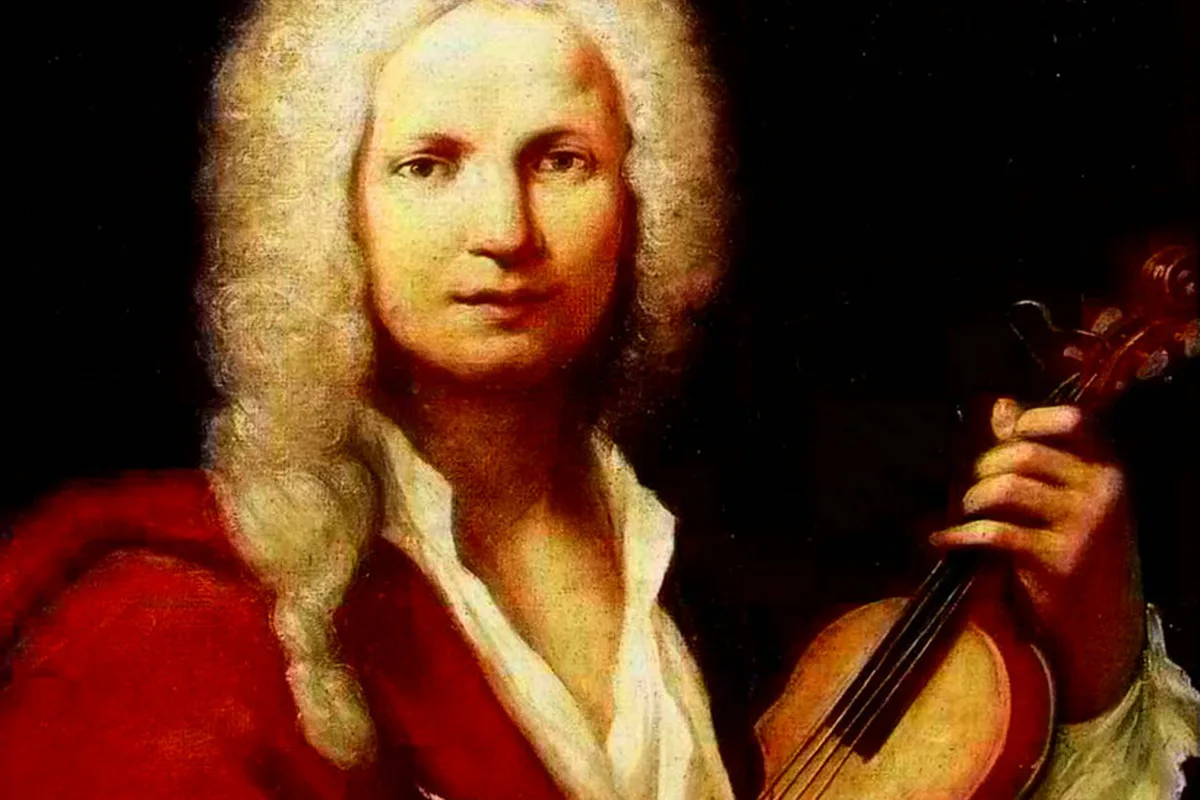
Wikipedia says the Four Seasons were published in 1725 in Amsterdam, as part of Il cimento dell'armonia e dell'inventione, Op. 8, and that they are the first four of a set of twelve concertos. It adds that they were composed around 1718 to 1723, when Vivaldi was court chapel master in Mantua, though one scholar has argued for an earlier date. The page describes Venice as Vivaldi's home city. In a Florence programme the set is the best known item, and it is the one the concert page names first.
Music that tells a story
Each concerto is paired with a sonnet, and each sonnet has three sections that match the three movements. The author of the sonnets is unknown, and Wikipedia notes that Vivaldi may have written them himself. This pairing makes the set, as the page puts it, one of the earliest detailed examples of program music, meaning music that depicts a story or scene. Each concerto follows the fast, slow, fast pattern. If you read the sonnet before the concert you can follow what the violin is doing: a storm is not an abstract idea but a rush of fast notes, and a frozen lake is a hesitant, slithering line.
Spring and Summer
Spring begins with birdsong and murmuring streams and then a thunderstorm, before a slow movement with a goatherd sleeping beside his barking dog and a finale of shepherds and nymphs dancing to bagpipes. Summer starts with heat that leaves people and flocks languishing, adds the call of the cuckoo and the turtledove, brings a cold north wind and then a storm that ends in ruinous hail. In a small ensemble you may hear the storm as a surge in the lower strings and a flurry from the soloist, with each player separately visible and audible.
Autumn and Winter
Autumn opens with villagers dancing at the harvest, moves to revellers asleep after drinking and ends with a dawn hunt, with horns and dogs, in which the quarry dies. Winter, in a minor key, starts with shivering on icy snow and stamping feet, offers a cosy slow movement beside the hearth with rain beyond the window, and ends with a cautious walk on ice that may crack. The contrast between the cosy slow movement and the harsh outer movements is one of the best-known effects of the set, and it is much clearer live than on a speaker.
Why a live chamber ensemble helps
Wikipedia says chamber music is music for a small group, usually with one performer to a part. In a work such as this, that means you can follow the soloist and watch how the lines are shared. Some details are easy to miss on a recording: a cello answering the violin, an upward rush passed from player to player, a sudden silence. The booking page does not say which of the four concertos or how much of each is played, and no running order is published, so read the details above as a tour of the whole set and not a promise of the evening's programme.
Recording history and why it feels familiar
Wikipedia traces the set's modern popularity through recordings. It lists Alfredo Campoli's recording, thought to date from 1939, as the earliest, and notes Bernardino Molinari's first proper electrical recording in 1942 and Louis Kaufman's 1947 American recording, and which did much to bring Vivaldi back to audiences across Europe and America. It says that by 2011 about a thousand recorded versions existed. That is why the opening of Spring is recognisable even to people who do not know its name: it has been played in films, advertisements and waiting rooms for decades. Hearing it live, in Florence, restores the surprise of music that was written to be performed in a room.
Frequently asked questions
Will all four seasons be played?
The page names the Four Seasons without a fixed running order. Check the programme you receive; this site cannot promise the set list.
Who is behind the sonnets?
Their author is unknown; Wikipedia says Vivaldi may have written them himself.
When was the work published?
In 1725 in Amsterdam, as part of Op. 8.
Do I need to read the sonnets first?
No, but it helps, because each sonnet matches the three movements of its concerto.
Sources