The city
Opera and the piano: two musical firsts from Florence
A humanist circle, a lost opera called Dafne and a Medici instrument maker: how Florence helped invent two cornerstones of Western music.
Reserve my seats ↗Quick answer
Florence can lay claim to two musical firsts. By Wikipedia's account the Camerata gathered by Count Giovanni de' Bardi, first recorded meeting on 14 January 1573, developed the speech-like singing that made opera possible, and Dafne by Peri and Rinuccini, 1598, is logged as the first opera, its score lost. The same encyclopaedia credits Bartolomeo Cristofori, working for the Medici, with inventing the piano, with the earliest reliable record dating to 1700.
Two Florentine firsts
| Opera | The piano | |
|---|---|---|
| Who | The Camerata, with Peri and Rinuccini | Bartolomeo Cristofori |
| Patron | Count Giovanni de' Bardi | Prince Ferdinando de' Medici |
| Key date | 1598 for Dafne; 1573 first recorded meeting | 1700 Medici inventory, the earliest reliable record |
| What survives | Dafne's music is lost | Three pianos from the 1720s |
A circle of humanists
The Florentine Camerata, or Camerata de' Bardi, was a group of humanists, musicians, poets and intellectuals in late Renaissance Florence, gathered under Count Giovanni de' Bardi. Wikipedia gives 14 January 1573 as the earliest recorded meeting and says their activity peaked between 1577 and 1582. The members included Giulio Caccini, Vincenzo Galilei, Jacopo Peri and the poet Ottavio Rinuccini. Its members held that music had grown corrupt and that reviving the forms of ancient Greek drama could improve music and society alike.
Words first, polyphony second
The group criticised polyphony, in which several lines overlap, because it blurred the sung text. Their experiments produced the stile recitativo, a way of setting words so that the text was clear and the voice followed the rhythm of speech, supported by simple accompaniment. Wikipedia says this helped make opera possible. Writings from the circle include Bardi's Discorso of 1578, Galilei's dialogue on ancient and modern music of 1581 to 1582 and Caccini's Le nuove musiche of 1602, which together show a movement thinking about music as a language.
Dafne and Euridice
In Wikipedia's record Dafne, by Peri and Rinuccini in 1598, counts as the first opera, with the music lost. Peri's Euridice, it adds, is the work most often named as the landmark. The page does not give a date for Euridice, so this guide does not either. What matters for a visitor is that the form that now fills theatres across the world took shape in Florence, not in a theatre but in a conversation among scholars. In the evening, you may sit within a short walk of the streets where it happened.
A Medici instrument maker
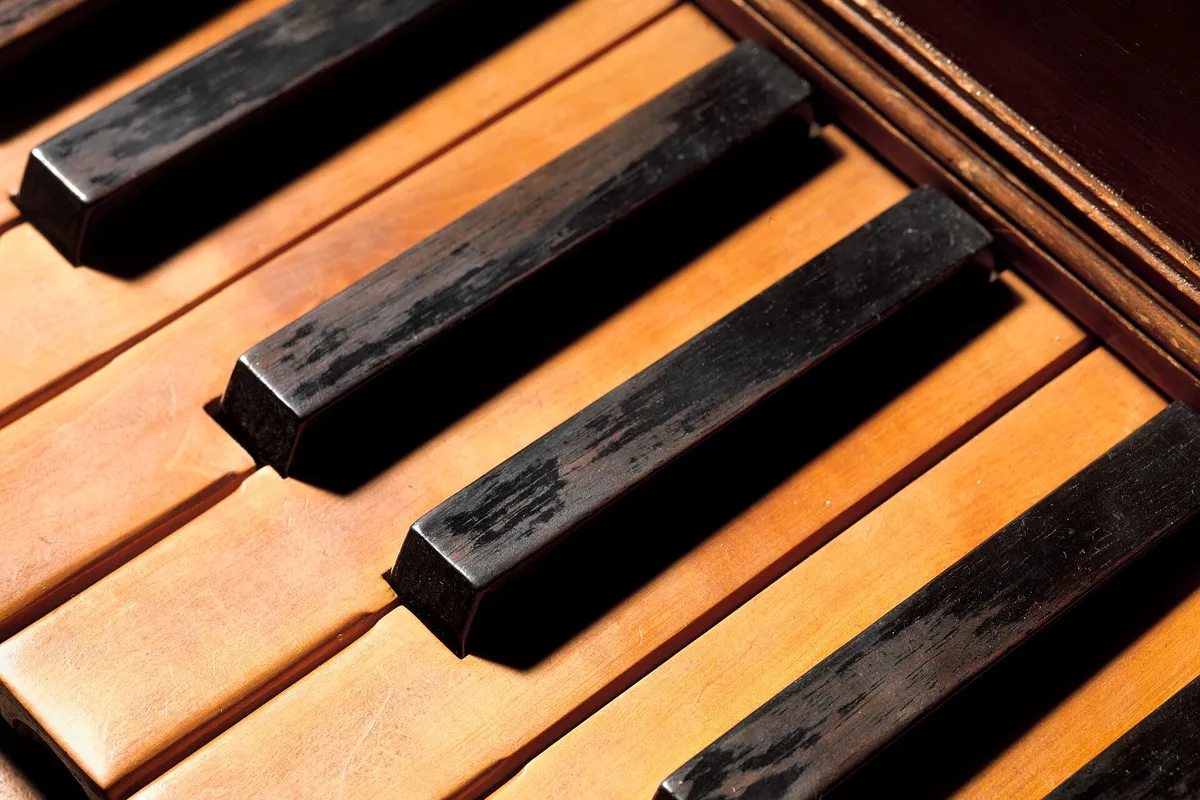
Wikipedia says Bartolomeo Cristofori was born in Padua on 4 May 1655 and was recruited in 1688 by Prince Ferdinando de' Medici in Florence to maintain, restore and develop the court's instruments. He later held the title of custodian of the collection. The earliest reliable record of his new instrument is a Medici inventory from 1700, which calls it an arpicembalo that makes the soft and the loud, hence the name piano-forte. An earlier date from a diary is now considered doubtful.
What survives, and where
Three Cristofori pianos survive, all from the 1720s. Wikipedia places the 1720 piano, heavily altered, in New York at the Metropolitan Museum, the 1722 piano in Rome and the 1726 piano in Leipzig. The page says his action design included many features still used in modern pianos, yet the piano was slow to catch on and became widely popular mainly after cheaper square pianos appeared in the 1760s. In other words, the instrument was born in Florence and flourished elsewhere.
What it means for a Florence concert evening
The concert on this page is for strings, not for keyboard, and the page does not say that a piano appears. The connection is the city. You will be listening to Vivaldi, Bach, Mozart and Pachelbel in a place where recitative, opera and the piano were first tried out. A short guided walk before the concert can tell that story in situ, and the concert supplies the music. Neither booking mentions these firsts on its page, so treat this guide as background, not as part of the programme.
Frequently asked questions
Was Dafne really the first opera?
Wikipedia records it as the first opera, with its music lost, and calls Peri's Euridice the most often cited landmark.
Who invented the piano?
Wikipedia credits Bartolomeo Cristofori, working at the Medici court in Florence.
When is the earliest record of the piano?
A Medici inventory of 1700, per Wikipedia.
Is a piano part of the concert?
The page does not say. It names a chamber orchestra playing works by Vivaldi, Mozart, Bach and Pachelbel.
Sources