The music
Pachelbel's Canon: the looping bass line everyone knows
Three violins over a repeating bass, an unknown date and a 1968 recording that made it famous: the story of a famous piece.
Reserve my seats ↗Quick answer
Pachelbel scored the Canon for three violins with a continuo bass and teamed it with a gigue. No one knows the year, Wikipedia says, though proposals run from 1680 to 1706; print came in 1919, and Jean-François Paillard's 1968 recording made it a favourite. A looping eight-chord bass, called the Romanesca, runs beneath it all. The Florence concert page names Pachelbel among the composers played, and in a string ensemble you can hear the three violin lines enter one after another.
Pachelbel's Canon in brief
| The facts, per Wikipedia | |
|---|---|
| Scoring | Three violins and basso continuo |
| Companion | A gigue, in D major, as Canon and Gigue |
| Date | Unknown; suggestions run from 1680 to 1706 |
| First printed | 1919, by Gustav Beckmann, without the gigue |
| The boom | A slower 1968 recording by Jean-François Paillard |
| The bass | An eight-chord pattern known as the Romanesca |
What a canon is
A canon is a piece in which one melody is imitated by other voices that enter later. Wikipedia describes Pachelbel's piece as a unison canon in three parts over a fourth-part ground bass. The three violins play the same tune, each starting a few bars after the last, while the bass underneath repeats its short pattern again and again. The result is a texture that builds without anyone needing to speed up: more voices pile in, the same ideas spiral higher, and the effect is hypnotic and calm.
The bass that never leaves
The repeating bass line implies a progression of eight chords, which Wikipedia lists in D major as D, A, B minor, F-sharp minor, G, D, G and A, and which it calls a pattern known as the Romanesca. A repeating bass of this kind is called a ground bass, and baroque composers used it as a frame on which to hang variations. Because the pattern repeats and returns, a listener can learn it quickly and then listen for what the violins do above it. The page notes that later songs, including pop hits of 1968 and later decades, reused the same progression, which explains why the chord sequence can feel familiar even if you have never heard the canon.
A date nobody knows
One surprise is how little is known about when it was written. Wikipedia reports that suggested dates range from 1680 to 1706, and that the oldest surviving manuscript dates from 1838 to 1842, well after the composer's lifetime. First printing came only in 1919, when Gustav Beckmann published the canon without the gigue that was meant to go with it. For centuries the work was a quiet piece in the repertoire, and a century ago it was a footnote. That arc, from obscurity to ubiquity, is part of its charm in the concert hall.
How a 1968 recording changed everything
The page says that Jean-François Paillard's 1968 recording, a slower and more Romantic interpretation with added obbligato parts, sparked the piece's popularity. Before then it was known mainly to specialists. After it, the canon became a staple of weddings, films and playlists. Live performances by a chamber ensemble often return to a lighter, brisker baroque style, so the same notes can feel quite different from the slow, lush version many people know. Hearing both ideas side by side is one of the quiet pleasures of a concert with Pachelbel on the programme.
What to listen for in Florence
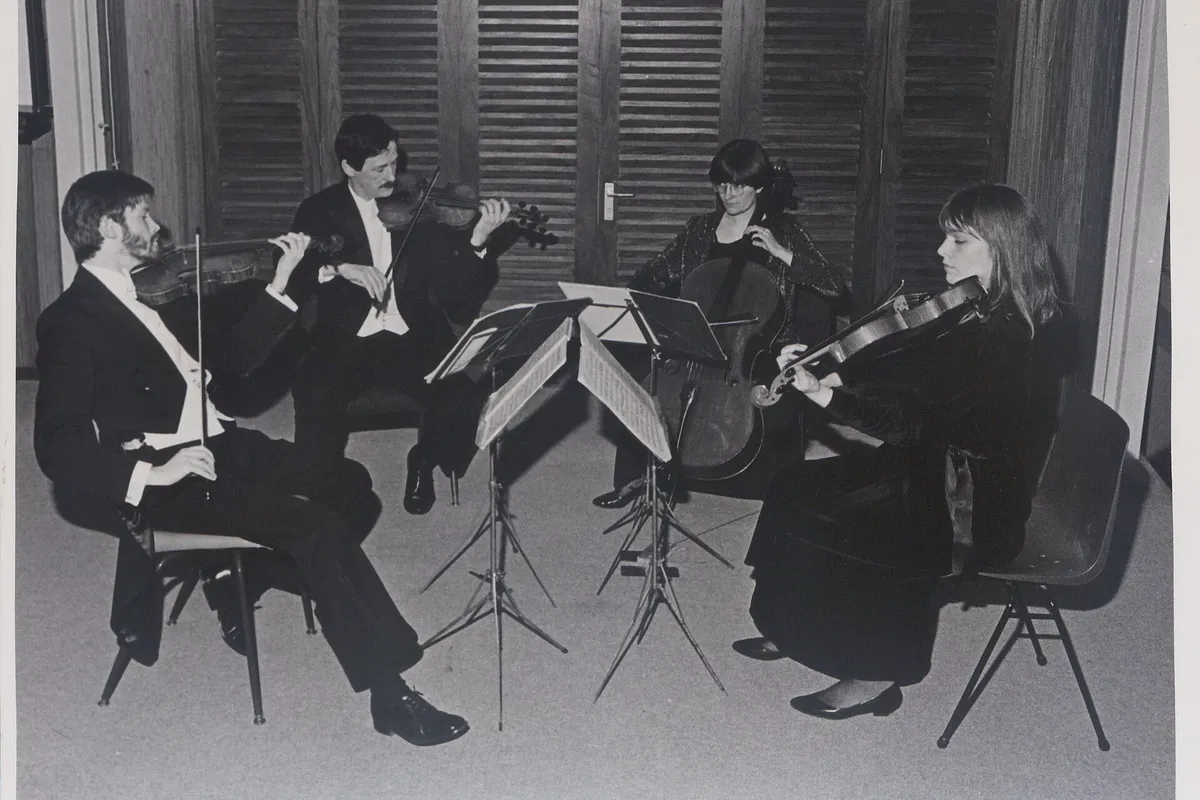
The concert page lists Pachelbel among the composers played by the Orchestra da Camera Fiorentina, without stating which piece, so the Canon is likely but not guaranteed. If it appears, watch for the first violin entering alone over the bass, then the second joining a few bars later and the third after that. The effect, in a small space, is of a single line being passed around a table. Listen, too, to the bass: if the cellist or the continuo player keeps a steady pulse, the rest of the piece will sit comfortably on it. The ending is gentle, and applause often waits a moment before it starts.
Frequently asked questions
Is the Canon definitely on the programme?
The page names Pachelbel without naming a piece, so check the printed programme.
Who first printed it?
Gustav Beckmann, in 1919, without the gigue, according to Wikipedia.
Why is it so well known?
Wikipedia credits a 1968 Jean-François Paillard recording with sparking its popularity.
What is the Romanesca?
The name Wikipedia gives to the eight-chord bass pattern beneath the canon.
Sources